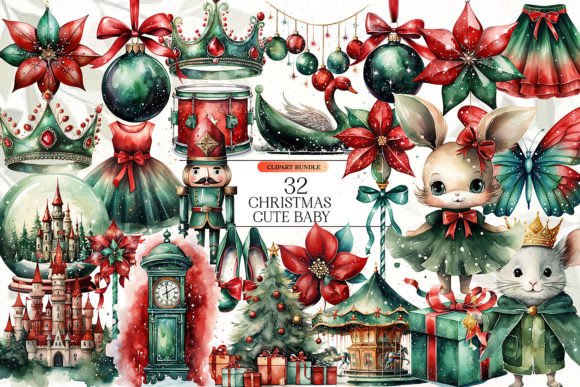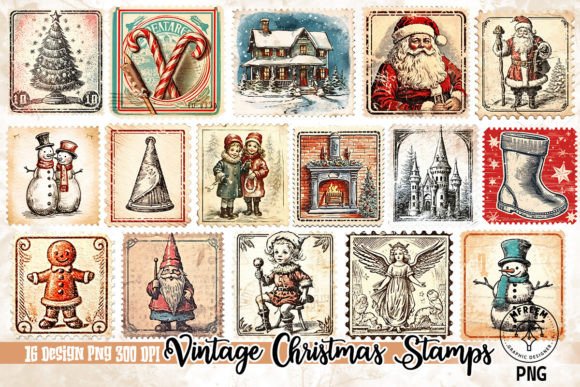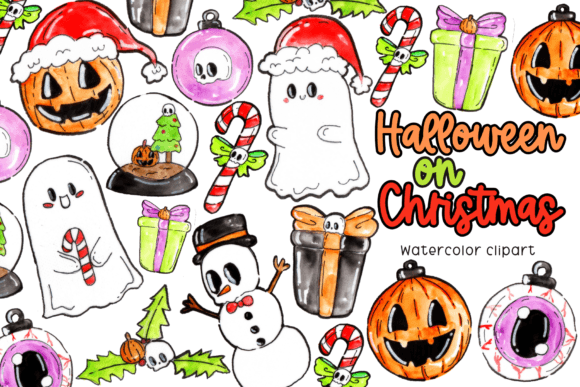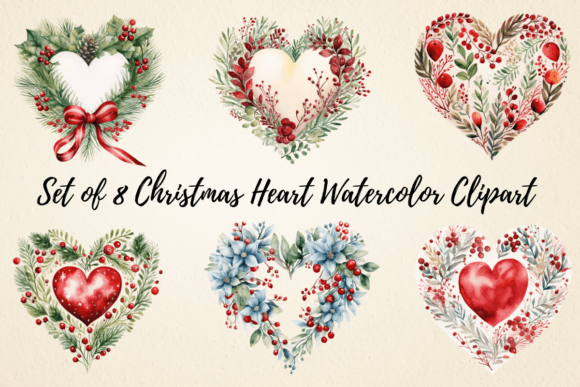
Daisy and Christmas Clipart for Seasonal Illustrations
I have spent years building digital product shops on platforms like Etsy, Creative Fabrica, and Shopify. I know that the difference between a listing that gathers dust and one that sells is often the quality of the graphic design asset you choose to build your collection around. Recently, I evaluated a specific set called Daisy and Christmas Clipart with the intent of using it for a new seasonal drop. My goal was not just to look at the images, but to see how they function as commercial tools for digital product creators, Cricut users, and small business owners.
First Impressions and Visual Personality
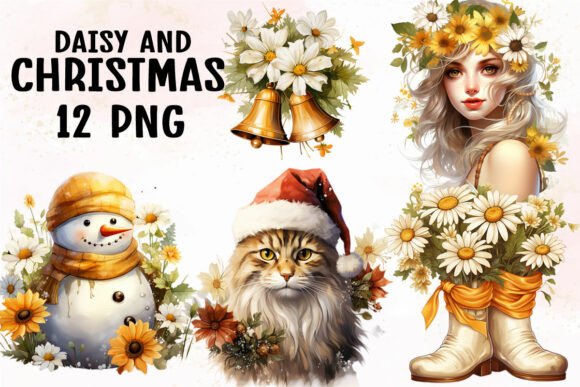
The moment I opened the files, the mood was immediately established. This isn't just generic holiday imagery; there is a distinct blend of rustic charm and festive warmth. For a seller, understanding the visual personality is critical because it dictates your target audience. Does this feel playful? Elegant? Or perhaps a bit more feminine and handmade? Daisy and Christmas Clipart leans heavily into a cozy, nostalgic aesthetic. It feels perfect for customers who love cottagecore vibes, farmhouse decor, or traditional holiday themes.
When evaluating these illustrations, I looked for consistency in line weight and color saturation. The daisy elements add a touch of softness that balances the boldness of typical Christmas motifs. This contrast makes the asset versatile. It can fit into a modern minimalist shop just as easily as a busy, pattern-heavy bundle. If you are planning a print-on-demand store, this style suggests a customer base that values authenticity over sleek corporate designs. It invites the buyer to imagine a warm living room or a hand-stitched card, which is exactly the emotional hook needed for high conversion rates.
Real-World Application: From File to Product
The true test of any design asset is its adaptability across different revenue streams. I ran a mental simulation of how I would integrate Daisy and Christmas Clipart into a live shop scenario. The possibilities are extensive, provided you understand the technical constraints of each medium.
For the SVG design crowd, these files are gold. I immediately thought of creating cut files for Cricut projects. A mother could use these to make personalized ornaments, tumbler wraps, or even nursery wall art. The clean lines suggested here are essential for vinyl cutting. If the curves are too complex, the machine will struggle, so verifying the vector paths is step one. Beyond crafts, these assets work beautifully for sublimation designs on mugs and tote bags. The resolution needs to be high enough to prevent pixelation when printed on fabric, but the composition should remain clear even when scaled down.
- Printable Wall Art: These illustrations can be framed within elegant borders to create instant downloadable downloads for home decor.
- Greeting Cards and Invitations: Combine the clipart with script fonts to create high-value Canva templates for wedding or baby shower invites.
- Sticker Design: Create sheets of die-cut stickers for planners or laptops. However, this requires careful attention to detail.
- Social Media Graphics: Use them as overlays for blog posts or Instagram stories to boost engagement during the holiday season.
If you are selling commercial design bundles, grouping these with matching digital papers or coordinating fonts increases the perceived value. A buyer is more likely to purchase a "Holiday Bundle" than a single image. This strategy helps you move inventory faster and builds a stronger brand identity for your shop.
Strategic Presentation and Mockups
In the world of online selling, the product mockup is everything. You cannot sell a digital file by showing just the flat image. You must show the customer what the final product looks like in their hands. When testing Daisy and Christmas Clipart, I focused on how it performs in a product mockup environment.
Does the design pop against a white background? Is it legible on a dark, textured surface? For instance, if you place this illustration on a dark red mug, does the contrast hold up? If the colors are too similar, the design gets lost. I recommend testing your thumbnails specifically. A listing image that is cluttered or has weak contrast will fail to get clicks. The visual hierarchy must be clear; the main subject should stand out immediately.
Furthermore, consider the context of the scene. If you are selling to crafters, show the design being used on a physical object like a cutting mat or a finished shirt. This bridges the gap between the digital download and the tangible result. It builds trust and reduces the hesitation a customer might feel about buying something they haven't touched yet. Consistency in your mockup style also reinforces your brand, making your shop look professional rather than like a random assortment of items.
Critical Testing Points Before Launching
Before hitting publish on your next Etsy product or Shopify listing, you must run a rigorous checklist. This is where many sellers lose money due to returns or poor reviews. First, verify the file resolution. For print products, 300 DPI is non-negotiable. Blurry prints destroy credibility. Second, check the PNG transparency. Are there white halos around the edges? This is a common issue that ruins the look of a sticker or overlay.
If you are selling SVGs, inspect the cut quality. Open the file in your cutting software and ensure there are no unnecessary anchor points or stray lines that could cause the blade to skip. Also, think about the text pairing. These illustrations need to be paired with the right typography. A serif font might complement the rustic feel, while a handwritten font adds a personal touch. Avoid using too many font styles, as this creates visual chaos.
Finally, confirm your commercial license. Just because you bought the asset doesn't mean you own the rights to resell it. Read the terms carefully. Some licenses allow you to use the design in end products (like a t-shirt) but prohibit you from reselling the raw file itself. Understanding this distinction protects your business from legal trouble.
Where to Exercise Caution
While Daisy and Christmas Clipart is versatile, it is not a magic bullet for every situation. There are specific scenarios where this asset might underperform. Be careful when applying these designs to tiny sticker details. If the intricate lines of the daisy are too small, they may disappear or become indistinct when printed at a miniature scale. Similarly, avoid placing these graphics on crowded thumbnails. If the background is too busy, the design loses its impact.
Low-resolution print products are another risk area. If you intend to sell large format posters, ensure the source file supports that size without losing quality. Additionally, be mindful of dark backgrounds. If the illustration relies on light colors for definition, it might get lost against a black or navy backdrop. Always test your designs on both light and dark surfaces before finalizing your product listing.
Ultimately, Daisy and Christmas Clipart is a strong addition to any creative marketplace inventory. It offers a unique blend of seasonal cheer and natural beauty that resonates with today's buyers. By treating it as a strategic tool rather than just a decorative element, you can build a cohesive, profitable collection that stands out in a crowded market. Whether you are a seasoned veteran or a new small business owner, paying attention to these details ensures your digital download delivers real value to your customers.